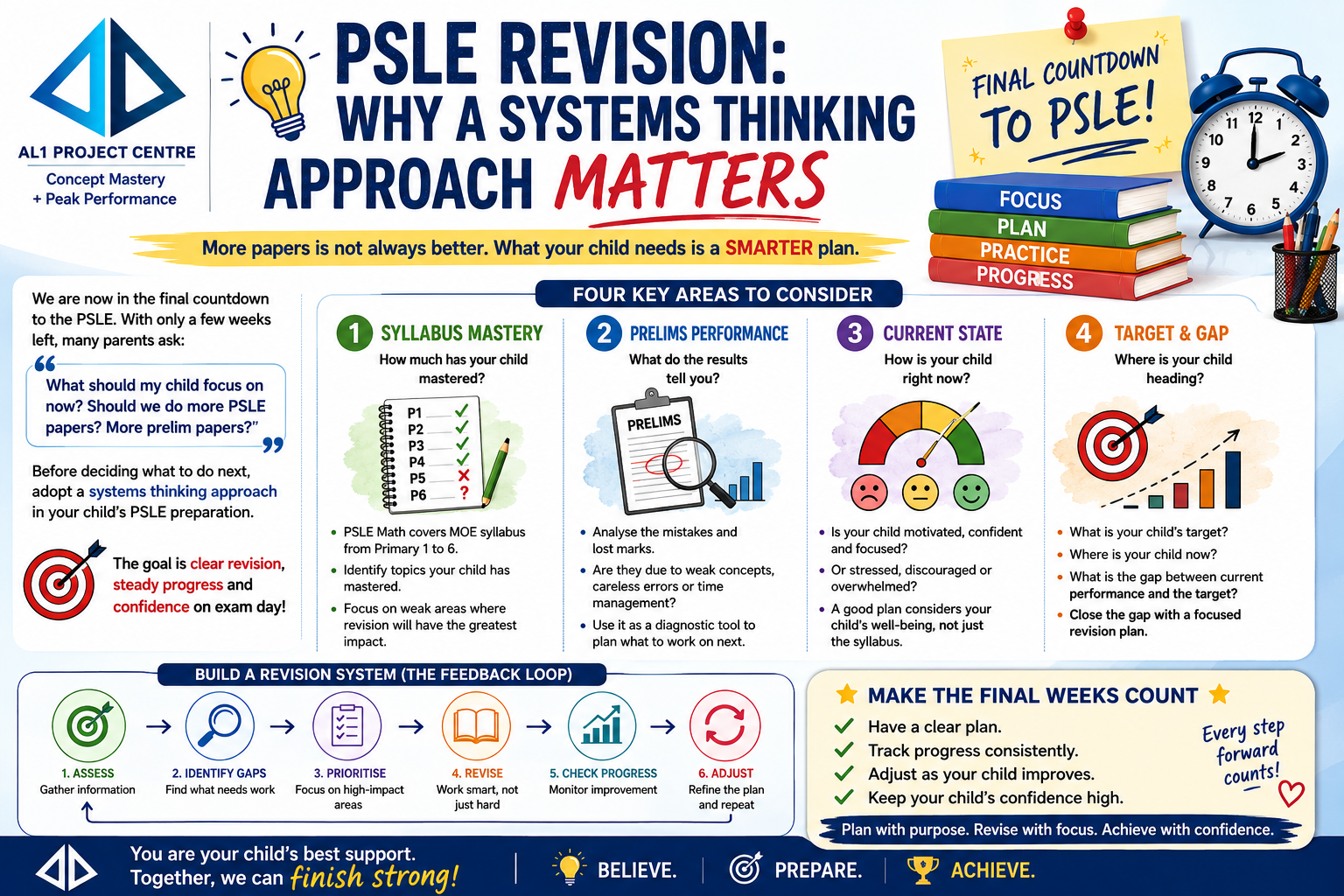
Why Children Struggle with Math Word Problems: The Power of Scaffolding and Concept Mastery
Discover why many children fear math word problems and how AL1 Project Centre’s 6-Step Concept Mastery Programme uses scaffolding to build confidence, understanding, and lasting problem-solving skills.
Why Many Children Struggle with Math Word Problems – And How the Right Scaffolding Makes All the Difference
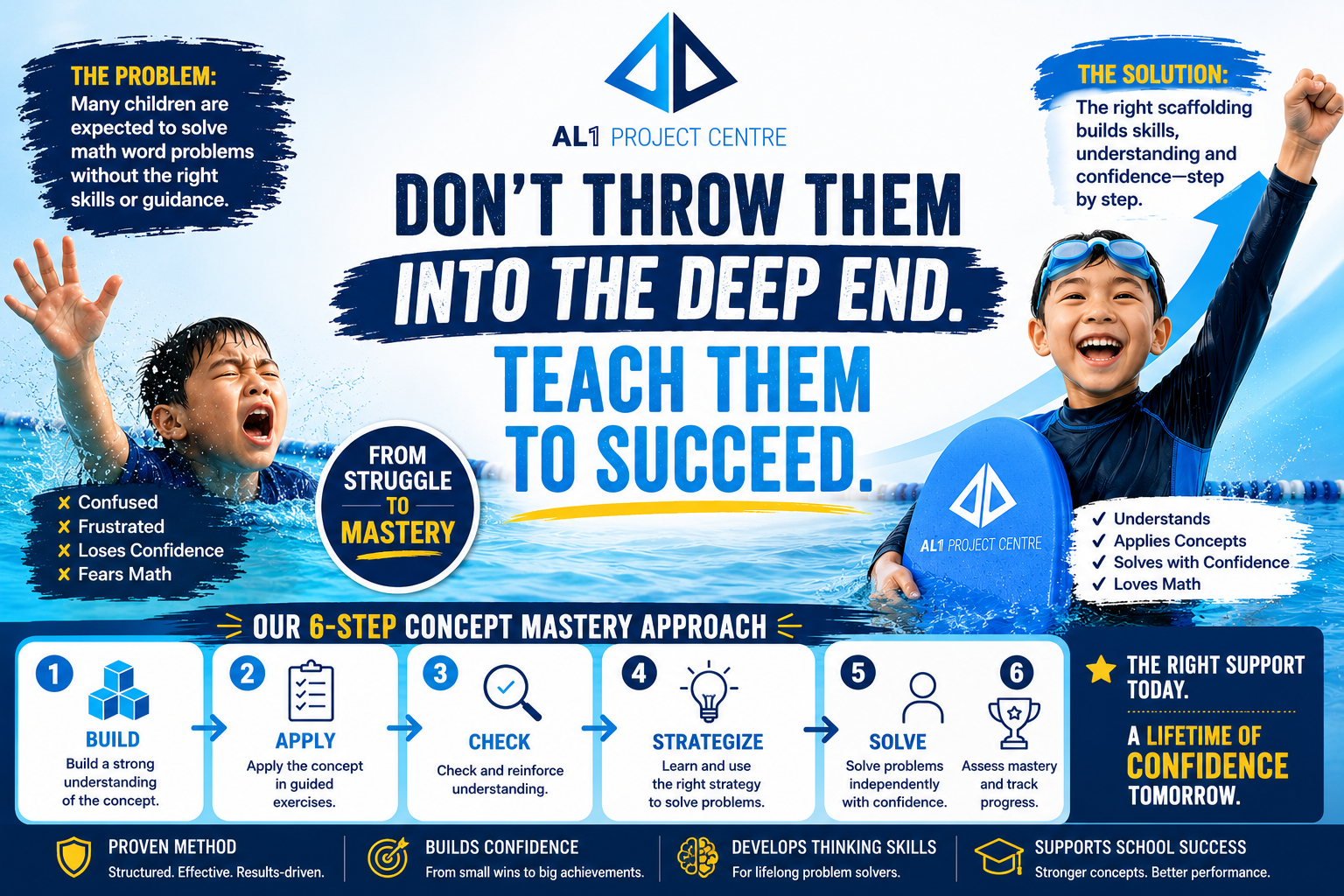
Imagine throwing a nine-year-old child into the deep end of a swimming pool without any swimming lessons. Would that child emerge as a champion swimmer?
Probably not.
More likely, the child would panic, swallow mouthfuls of water, and need someone to rescue them. If they were fortunate, they might escape without developing a lifelong fear of water.
Most parents would never expose their children to such an experience. Yet, this is surprisingly similar to how many children are expected to learn math word problems.
The Hidden Problem with Traditional Math Practice
Many students are handed worksheet after worksheet and expected to solve challenging word problems immediately. When they struggle, they begin to believe they are “bad at math.”
The truth is that problem-solving is a skill that must be taught systematically.
A child needs to learn how to:
* Understand what the question is asking.
* Identify the relevant mathematical concepts.
* Choose an appropriate solving strategy.
* Carry out the calculations accurately.
* Check whether the final answer makes sense.
Unfortunately, many assessment books provide only a single worked example before expecting children to solve numerous questions independently. Without proper guidance, frustration quickly replaces confidence.
Why Scaffolding Is Essential for Math Success
At AL1 Project Centre, we believe that children learn best when they receive structured support before being expected to work independently.
Instead of throwing students into the “deep end,” we use a carefully designed scaffolding approach through our proprietary 6-Step Concept Mastery Programme.
The first three stages help students:
1. Build a solid understanding of the concept.
2. Apply the concept in guided situations.
3. Check and reinforce their understanding.
Only after these foundations are secure do students move on to solving full word problems with teacher guidance. They then practise independently to build confidence before completing an assessment that measures true mastery.
From Confusion to Confidence
Our goal is not simply to teach children how to answer one particular question. We want them to understand the underlying concepts so they can confidently tackle unfamiliar and challenging problems on their own.
This structured progression helps reduce math anxiety, strengthens critical thinking, and equips students with lifelong problem-solving skills.
Just as every child deserves swimming lessons before diving into deep water, every child deserves proper guidance before tackling complex math word problems.
With the right support, children don't just learn to solve math problems—they learn to think with confidence.