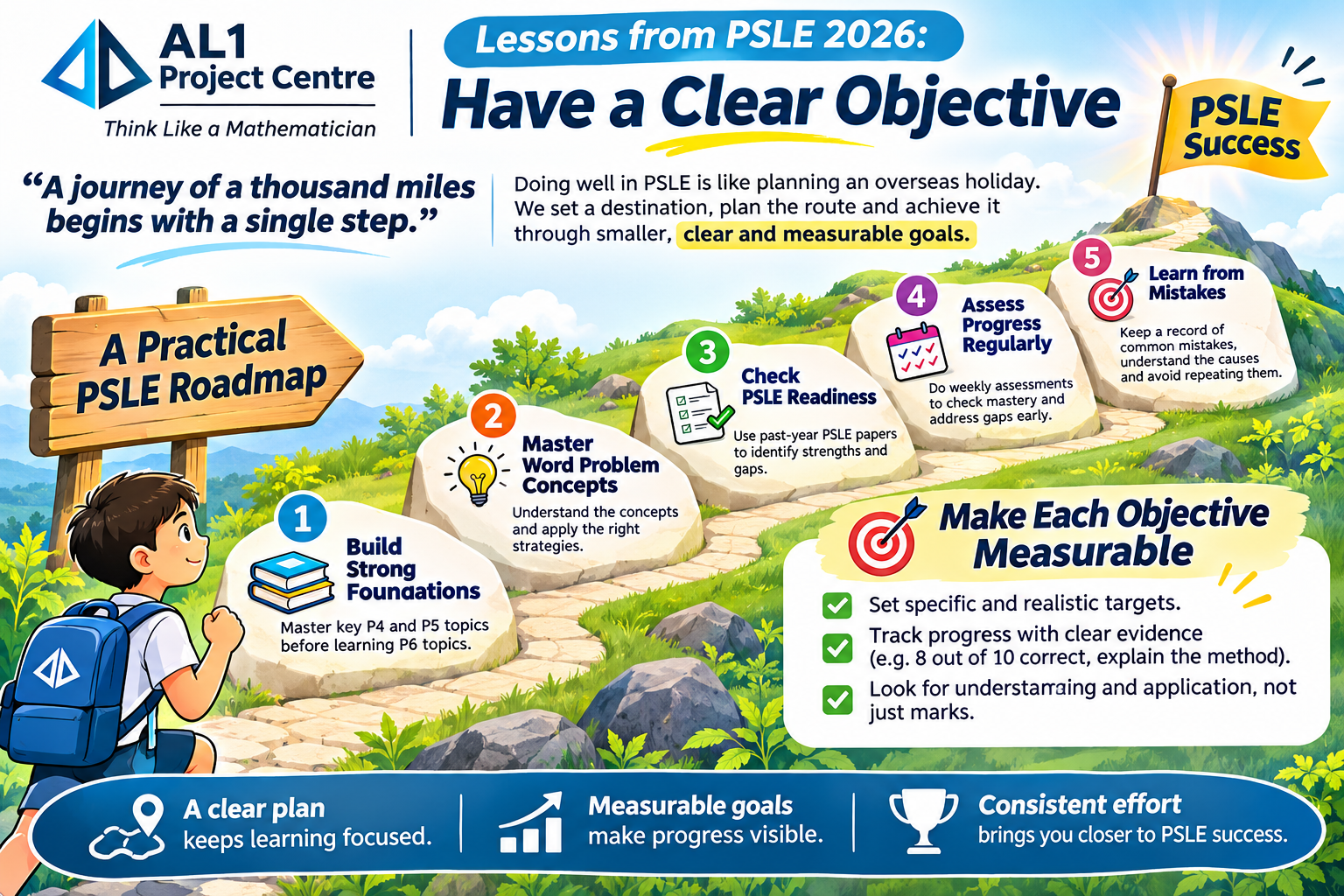
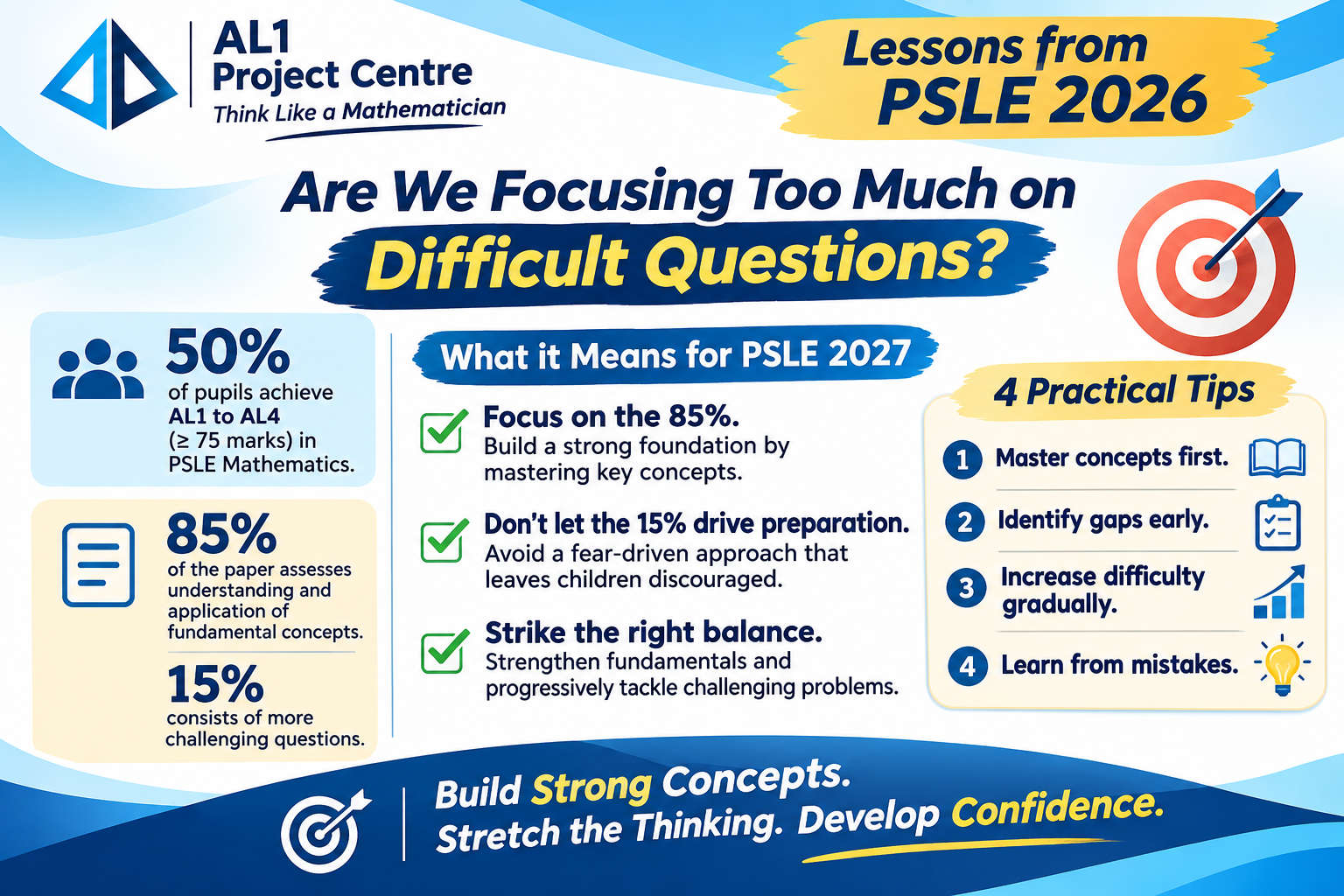
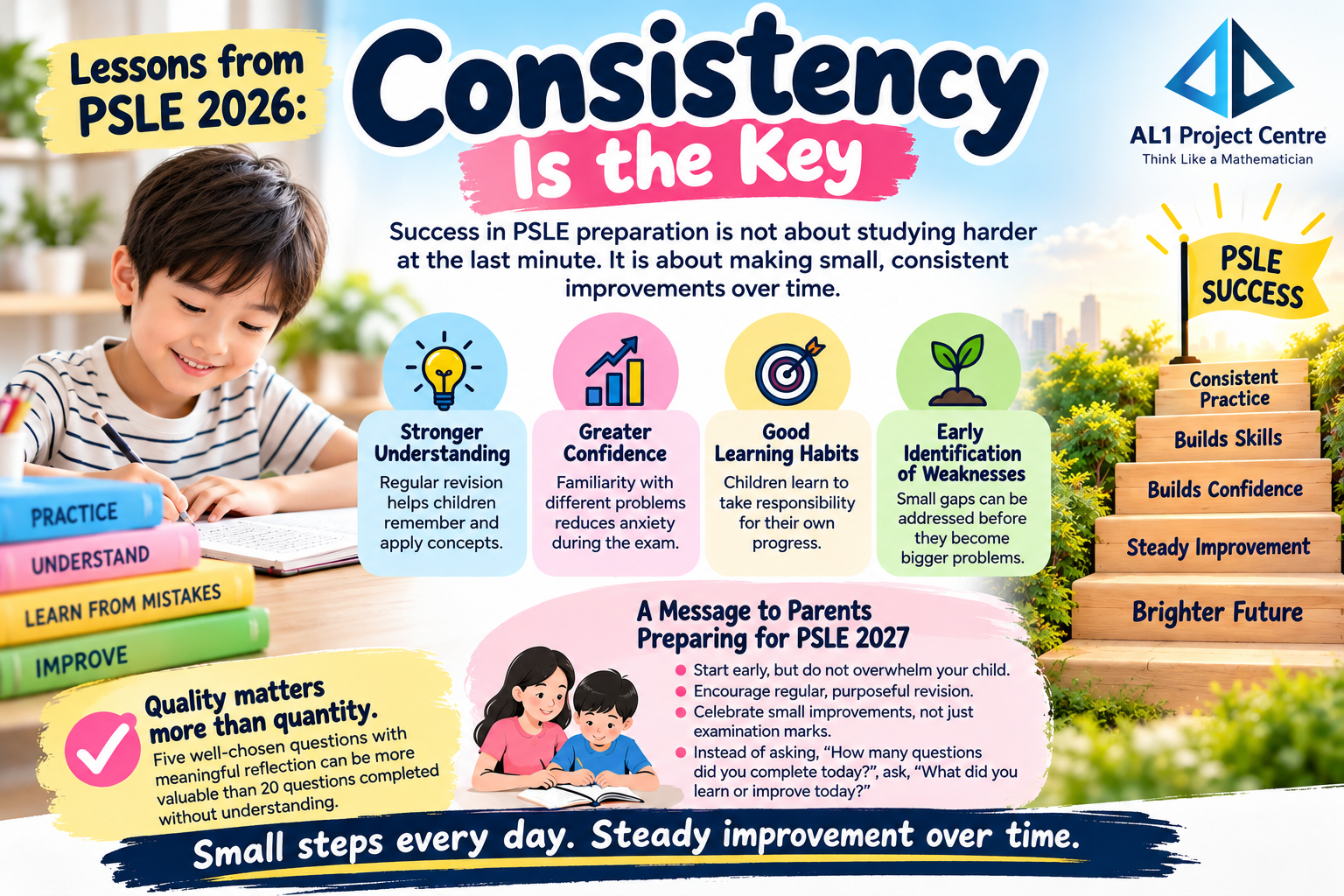
Lessons from PSLE 2026: The Power of Self-Belief
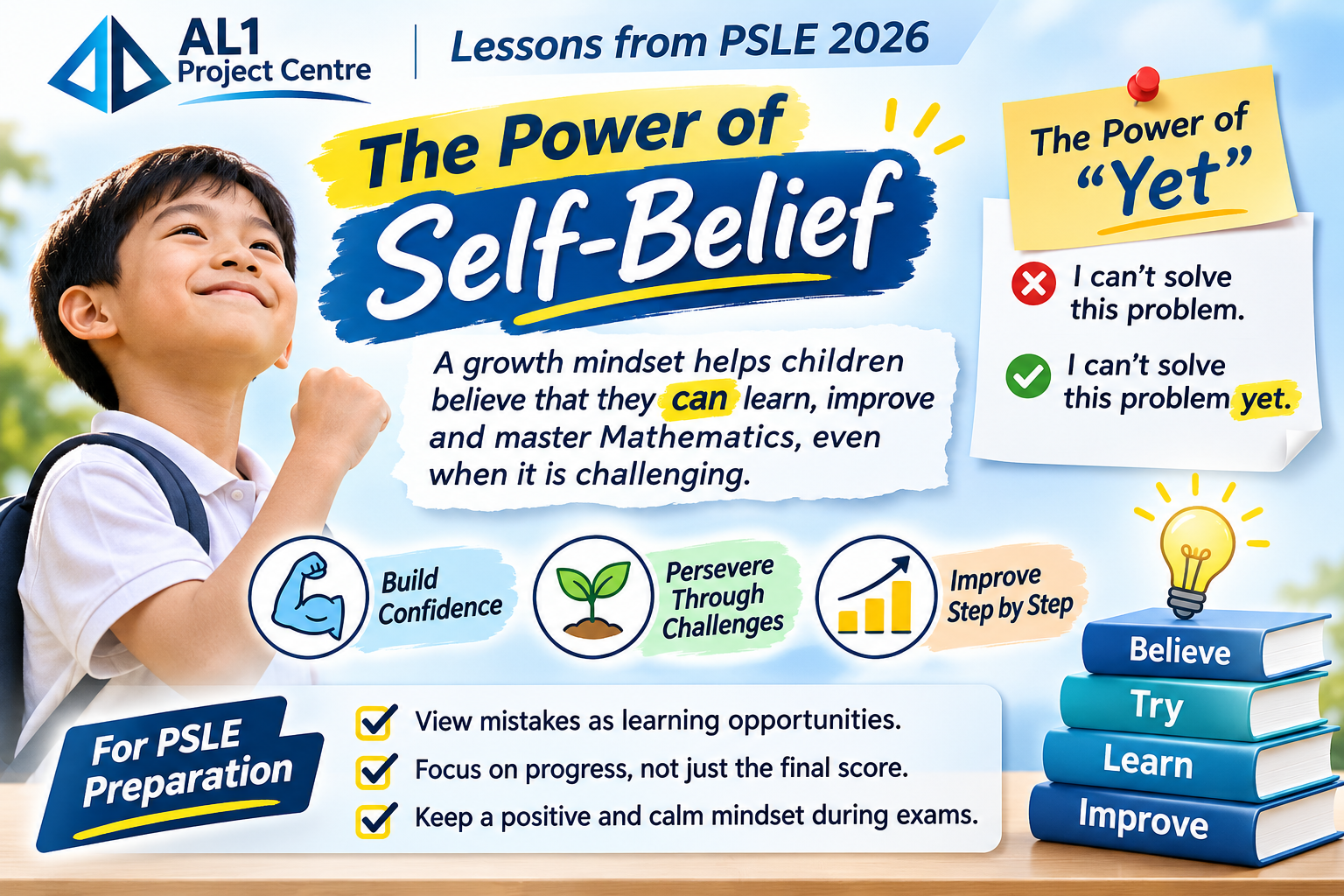
Self-belief is the foundation of success in PSLE preparation. With a growth mindset, children learn to embrace challenges, overcome setbacks and believe that they can improve through perseverance and practice.
“Whether you think you can, or you think you can't, you're right.” — Henry Ford
One of the most powerful ideas in education is the growth mindset. Although the concept is widely discussed, its importance is often not fully understood or applied.
At the heart of growth mindset is a simple belief: Our abilities are not fixed. We can improve through effort, effective strategies, practice and perseverance.
In Mathematics, this means helping children believe that they are capable of understanding and mastering mathematical concepts, even when they initially find them difficult.
The Power of "Yet"
One of the biggest challenges in PSLE preparation is not necessarily the difficulty of the questions, but how children respond when they cannot solve them.
When faced with a challenging problem, some children immediately conclude, "I'm not good at Maths" or "I'm just not smart enough."
Over time, such negative beliefs can affect their confidence, motivation and willingness to try.
This is where the power of "yet" becomes important.
Instead of saying, "I can't solve this problem," we encourage children to say, "I can't solve this problem YET."
That one word changes their perspective. It reminds them that their present difficulty does not determine their future ability.
However, believing in themselves does not mean that success will come simply by trying harder. Children must also learn to reflect on their mistakes, explore different strategies and seek guidance when necessary.
Self-belief gives children the courage to keep learning. Effective learning strategies help them make progress.
Self-Belief and Examination Stress
As PSLE approaches, many children experience increasing pressure to perform well.
When children believe that their mathematical ability is fixed, every mistake can feel like evidence that they are not good enough. This creates unnecessary anxiety and may even discourage them from attempting challenging questions.
A growth mindset helps children view mistakes differently.
Instead of seeing mistakes as failures, they learn to see them as opportunities to identify gaps in their understanding and improve.
More importantly, they begin to focus on what they can control: their preparation, learning strategies and responses to challenges, rather than worrying excessively about their eventual PSLE score.
Building Confidence Through Small Successes
Self-belief is not developed through encouragement alone. Children need to experience progress.
When a child finally understands a difficult concept, solves a problem independently or improves in a weekly assessment, that small success strengthens their confidence.
This creates a positive cycle:
Believe → Try → Learn → Improve → Believe More
Over time, these small achievements help children develop the confidence to tackle increasingly challenging problems.
The Real Goal of PSLE Preparation
As we prepare our children for PSLE 2027, we should remember that academic preparation is not just about completing more practice papers or mastering more problem-solving techniques.
It is also about developing children who believe in their ability to learn, are willing to persevere and can approach examinations with confidence.
We cannot promise every child an AL1, but we can help every child become a stronger mathematical thinker.
The greatest gift we can give our children is not the belief that they will never fail, but the confidence that they can learn, improve and overcome difficulties.
That is the true power of self-belief.