PSLE Math Revision: Are Practice Papers Enough to Improve Your Child's Score?
Discover why doing more PSLE practice papers alone may not improve your child's math results and learn a smarter revision strategy that targets conceptual gaps.
Are Practice Papers Really the Best PSLE Math Revision Strategy?
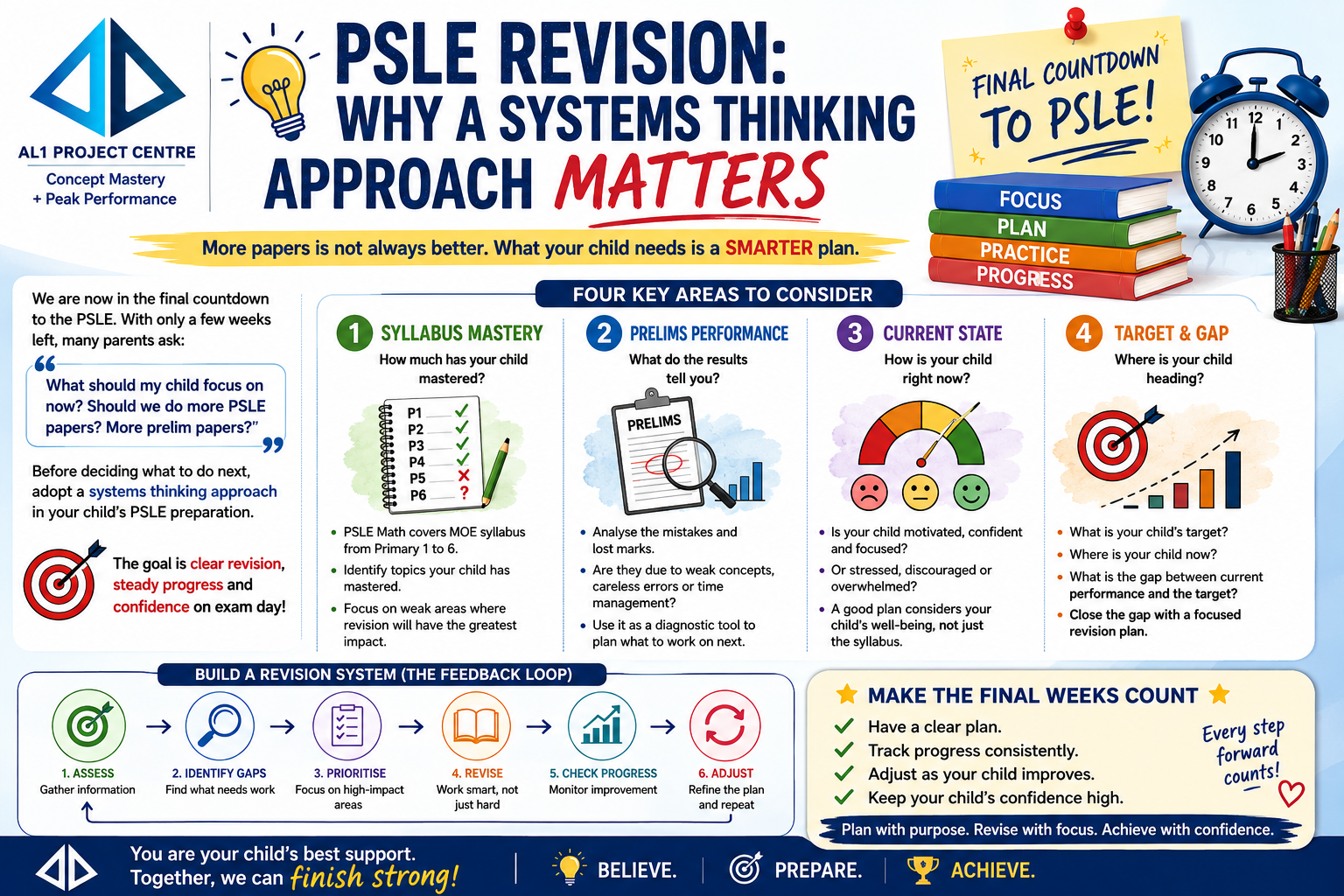
As the PSLE approaches, many parents naturally turn to practice papers as their child's main revision tool. Completing past-year PSLE papers and school preliminary examination papers is certainly valuable—but only when used correctly.
The truth is that practice papers should be used as a diagnostic tool, not just a score-generating exercise.
Practice Papers Predict Performance
One of the biggest benefits of doing timed practice papers is that they provide a realistic estimate of how your child is likely to perform in the actual examination.
If your child has consistently been scoring around 70%, it is reasonable to expect a similar result in the PSLE unless meaningful improvements are made. Likewise, a student who regularly scores 60% is unlikely to suddenly achieve 80% on exam day without addressing the underlying weaknesses.
Rather than hoping for a dramatic jump in marks, parents should focus on creating a steady upward trend over time.
Don't Just Record Scores—Track Progress
Instead of looking at individual results in isolation, monitor your child's performance across multiple practice papers.
Ask yourself:
* Are the scores gradually improving?
* Are they remaining stagnant?
* Are they fluctuating wildly from paper to paper?
An upward trend usually indicates that revision strategies are working. If scores remain flat or inconsistent, it may be a sign that your child needs a different approach.
Every Mistake Tells a Story
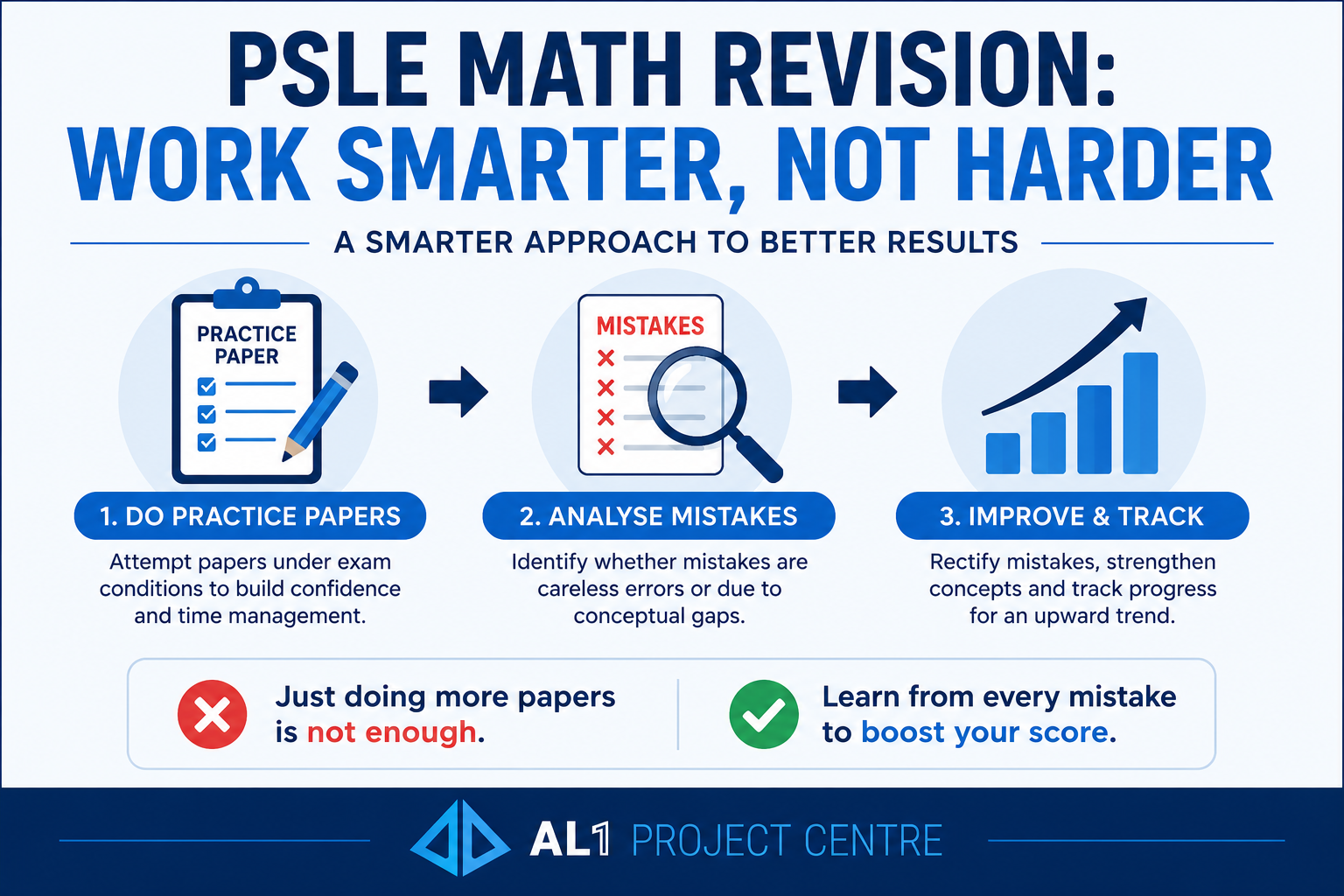
The real value of practice papers lies in analysing mistakes.
For every incorrect answer, identify whether it was caused by:
* A careless error, such as a miscalculation or reading the question incorrectly.
* A conceptual misunderstanding, where the child does not fully understand the mathematical idea or method being tested.
Simply marking answers wrong and moving on does little to improve future performance. True learning happens when mistakes are understood and corrected.
Focus on Fixing Weaknesses, Not Just Doing More Papers
Many students complete dozens of practice papers but see little improvement because they repeat the same mistakes over and over again.
A more effective revision strategy is:
1. Attempt a practice paper under exam conditions.
2. Carefully review every mistake.
3. Identify the root cause of each error.
4. Relearn the relevant concept if necessary.
5. Practise similar questions until mastery is achieved.
6. Repeat the cycle and monitor whether scores improve.
This targeted approach builds understanding instead of merely increasing exposure.
Final Thoughts
Practice papers are an excellent way to prepare for the PSLE, but quantity alone does not guarantee better results. The key is to use each paper as a learning opportunity to uncover conceptual gaps and eliminate recurring mistakes.
When students understand why they made an error and take steps to correct it, their confidence grows, their performance becomes more consistent, and meaningful score improvements become achievable.
At AL1 Project Centre, we believe that effective revision is not about doing more questions—it is about learning from every question.