Lessons from PSLE 2026: What Parents of PSLE 2027 Children Should Know (1)

Don’t prepare your child only to know the answers. Prepare your child to perform when it matters.
PSLE 2026 is coming to an end.
As usual, after the Mathematics paper, much of the discussion has been about one question:
Was the paper harder this year?
But perhaps there is a more important question we should be asking:
What can parents of children taking PSLE 2027 learn from this year’s experience?
One lesson stood out to us.
Being prepared academically is not enough
Many children spend months preparing for PSLE. They revise their concepts, practise past-year questions and work on their weaker topics.
Yet one area can easily be overlooked:
Is your child prepared to handle the pressure of the actual examination?
This year, we heard from children who struggled to sleep properly in the days leading up to their examinations. Some had interrupted sleep. Others found it difficult to fall asleep at all.
This matters because a child may know the mathematics — but still struggle to show what they know when anxiety, fatigue and pressure take over.
Exam stress can affect learning AND performance
Stress can affect a child even before the examination.
When a child is highly stressed, it can become harder to concentrate, process information and learn effectively. Hours spent revising do not necessarily translate into effective learning when the child is mentally exhausted or overwhelmed.
Then comes the examination itself.
A child may have understood a concept perfectly during lessons but suddenly struggle to recall it under pressure. He or she may misread a question, overlook important information or make a careless calculation error.
And when the child has not slept well the night before, the problem can become worse.
That is why PSLE preparation should not simply be about:
“How much more can my child revise?”
It should also be about:
“How can I help my child perform at his or her best when it matters?”
Preparing the mind is part of preparing for PSLE
Parents do not have to wait until the weeks before PSLE to address examination stress.
In fact, the earlier children learn how to manage pressure, the better.
Here are six things parents can start doing:
1) Frame PSLE positively.
Instead of presenting PSLE as something to fear, help your child see it as an opportunity to put in his or her best effort and demonstrate what has been learnt.
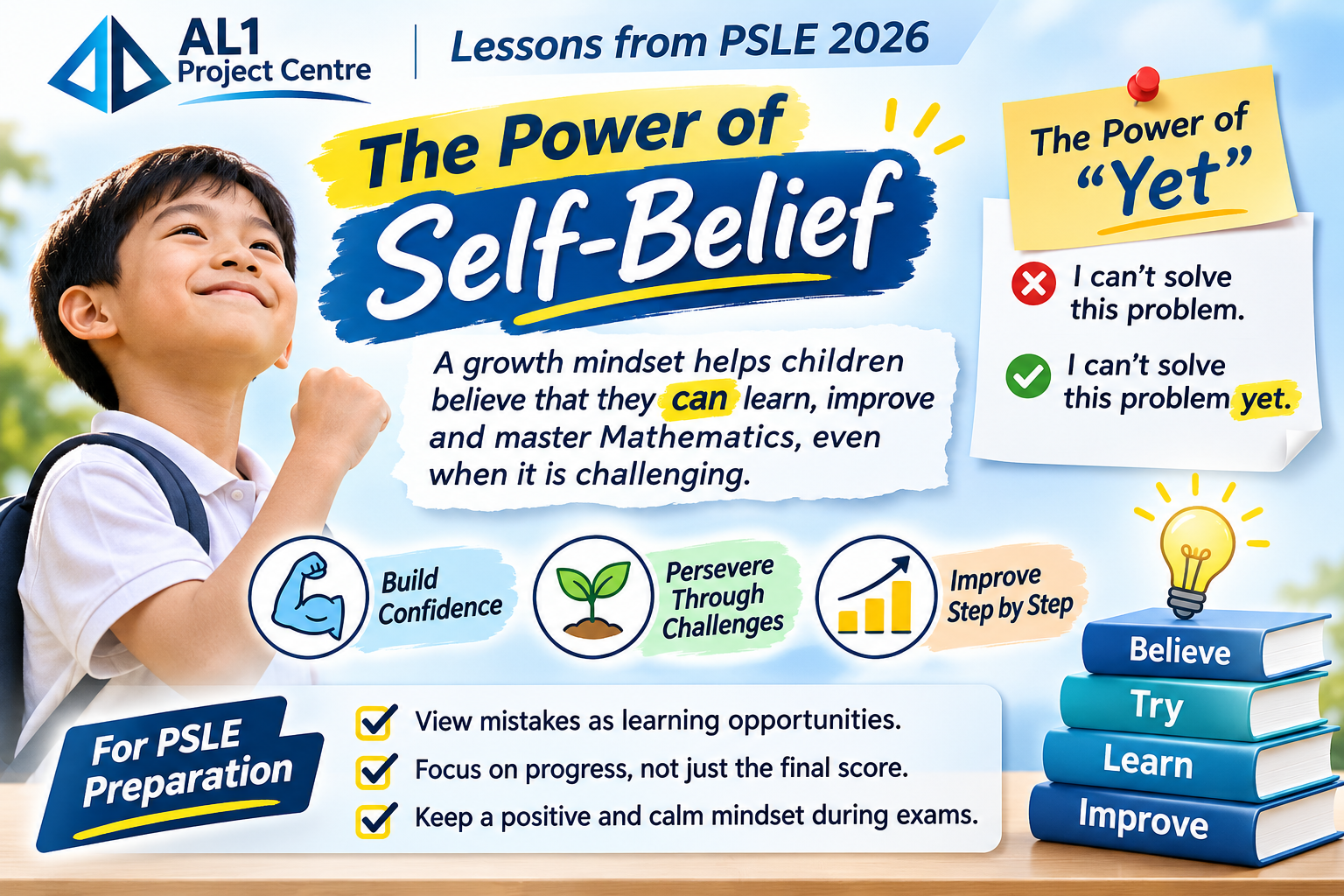
2) Develop a growth mindset.
Help your child understand that difficulty does not mean failure. Mistakes, challenging questions and disappointing results can all become opportunities to learn and improve.
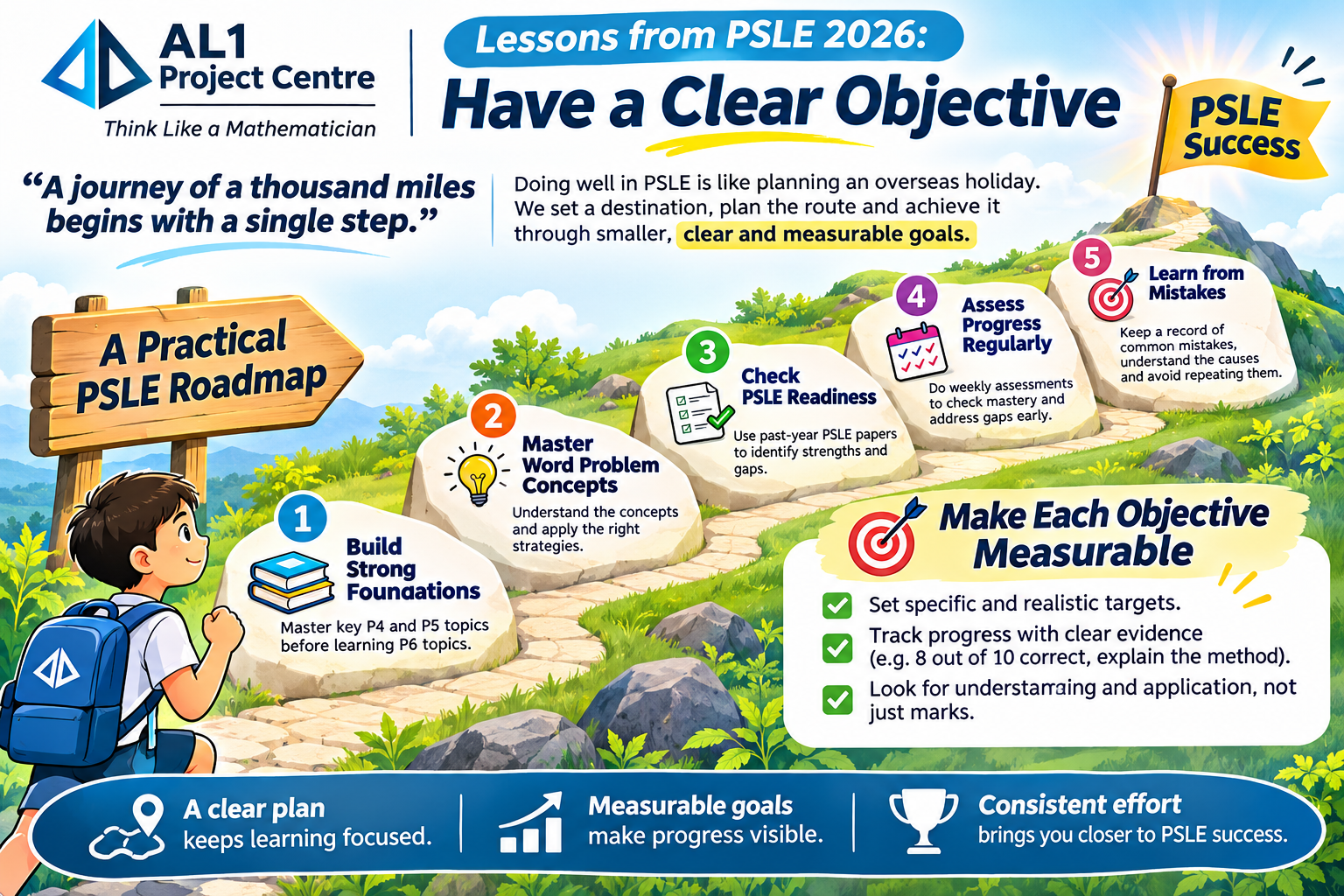
3) Build a revision system — not last-minute revision.
A clear and consistent revision system gives children time to identify gaps, strengthen concepts and become familiar with examination demands. Confidence grows from preparation.
4) Teach simple ways to manage stress.
Deep breathing, stretching and short relaxation routines can help children learn how to calm themselves when they feel overwhelmed.
5) Protect time for play and physical activity.
Preparing for PSLE should not mean removing everything enjoyable from a child’s life. Games, exercise and sports can provide an important mental break from academic pressure.
6) Make sleep part of the PSLE strategy.
Healthy sleep habits should be developed well before the examination period. Sleep should not be sacrificed simply to squeeze in another hour of revision.
The goal is not a stress-free PSLE
Some stress before an important examination is normal.
The goal is not to eliminate stress completely.
The goal is to help your child learn to manage it.
We spend a great deal of time teaching children how to solve fractions, percentages, ratios and problem sums.
Perhaps we should spend more time teaching them something equally important:
How to remain calm, think clearly and perform under pressure.
For parents preparing their children for PSLE 2027, this may be one of the most important lessons we can take away from PSLE 2026.
Don’t prepare your child only to know the answers.
Prepare your child to perform when it matters.