Lessons from PSLE 2026: Is Maths Really Getting Harder?
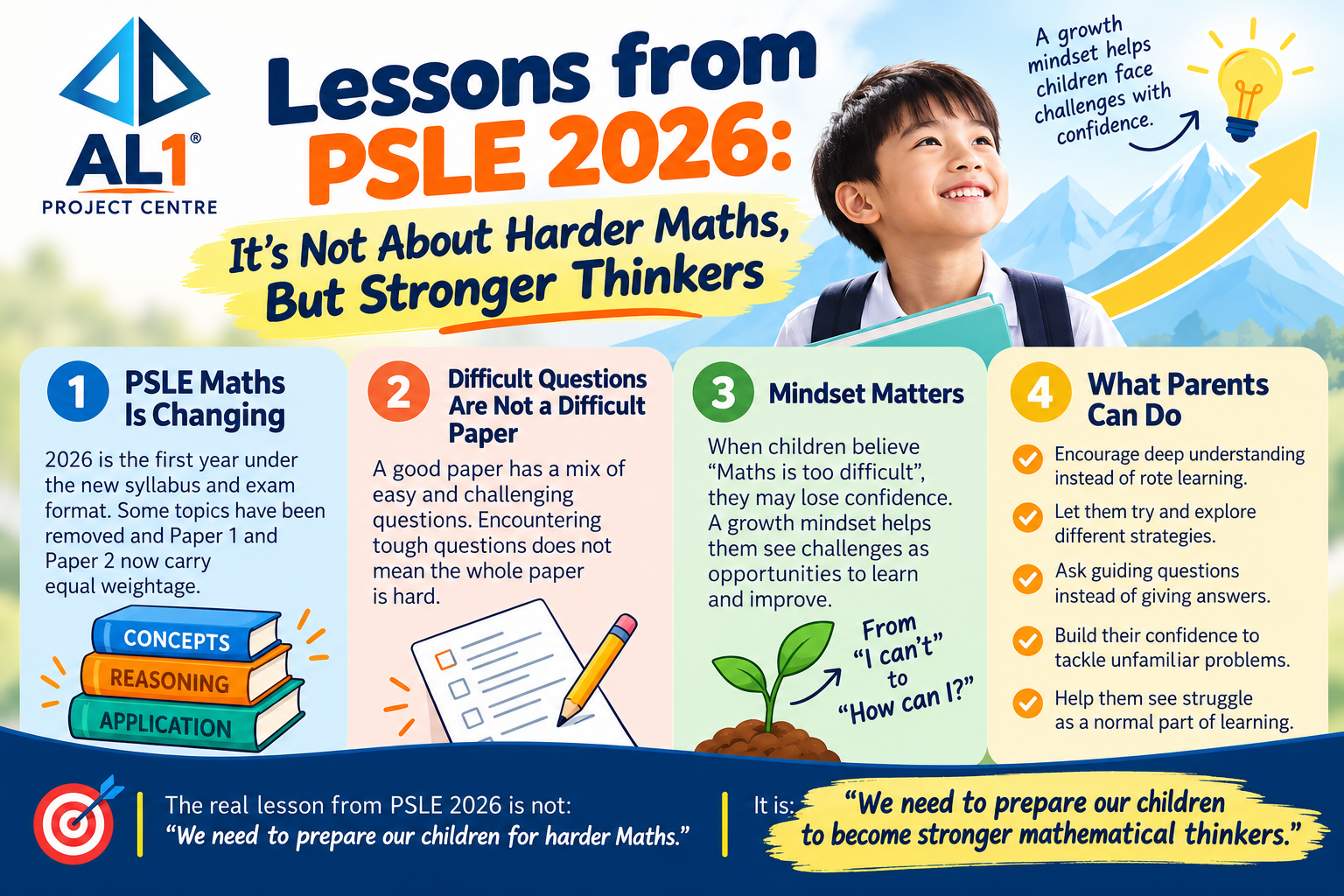
Mathematics today is not exactly the Mathematics that many parents experienced when they were children. The emphasis is increasingly not just on knowing what to do, but on being able to reason, apply, adapt and persevere. So perhaps the most important lesson from PSLE 2026 is not: “We need to prepare our children for harder Maths.” It is: “We need to prepare our children to become stronger mathematical thinkers.”
Lessons from PSLE 2026: Is Maths Really Getting Harder?
After the 2026 PSLE Mathematics examination, a common reaction from parents and children was:
“The paper was so difficult!”
It is understandable why parents may feel concerned. But instead of simply asking whether PSLE Maths is becoming harder, perhaps there is a more useful question we should be asking:
Are our children being prepared for the way Mathematics is changing?
PSLE Maths Is Changing
2026 marks the first year that Primary 6 pupils are being tested under the new Mathematics syllabus and examination format.
Some content has been removed from the syllabus, while the examination format has also been simplified, with Paper 1 and Paper 2 now carrying equal weightage.
Yet despite these changes, many pupils still found parts of the paper challenging.
This tells us something important.
Reducing syllabus content does not necessarily mean reducing the level of thinking required.
A Mathematics paper can contain familiar concepts and still be challenging when pupils are expected to apply those concepts in unfamiliar situations.
Difficult Questions Are Not the Same as a Difficult Paper
When a child encounters several challenging questions, it is easy to walk out of the examination hall thinking:
“The whole paper was difficult.”
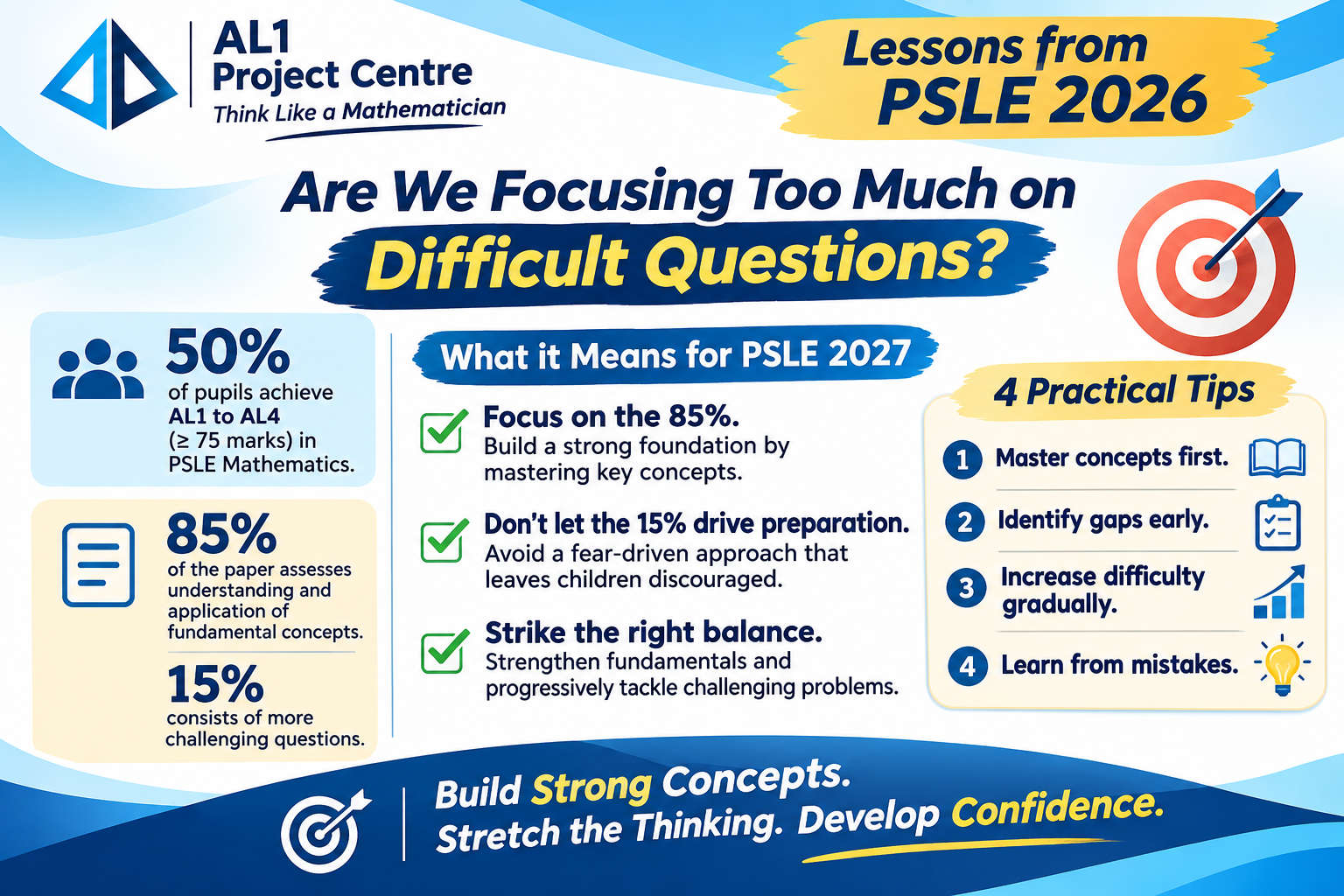
But a good examination needs questions of different levels of difficulty. Some assess basic understanding and fluency, while others differentiate pupils by requiring deeper reasoning and application.
This distinction matters.
If we tell children repeatedly that “PSLE Maths is getting harder and harder,” we may unintentionally create fear before they even attempt the questions.
The bigger issue, therefore, may not be whether Mathematics is becoming harder.
It may be how our children respond when Mathematics becomes challenging.
The Mindset We Bring to Mathematics Matters
Some children approach Mathematics believing:
“I’m not good at Maths.”
“Word problems are too difficult.”
“I can never solve this type of question.”
When children carry these beliefs into their learning, every unfamiliar question becomes evidence that Mathematics is “too hard”.
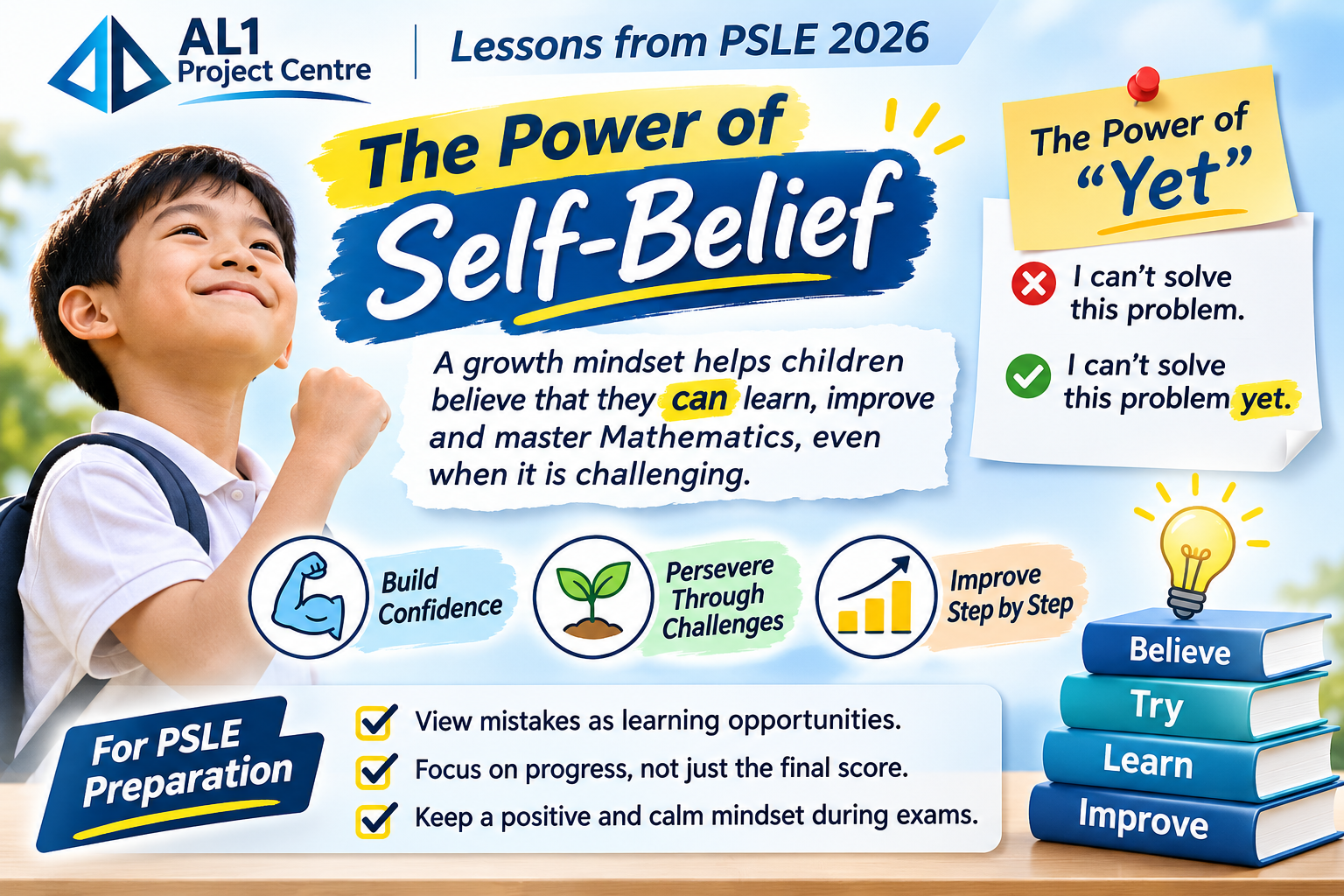
A child with a growth mindset approaches the same question differently:
“I don't know how to solve it yet. What can I try?”
That small change in thinking is powerful.
It shifts the child from fear to exploration, from giving up to trying, and from “I can't” to “How can I?”
What Parents Can Do Differently
Perhaps one of the most important lessons from PSLE 2026 is that preparing children for Mathematics cannot be only about doing more worksheets or memorising more methods.
Children also need opportunities to:
understand concepts deeply rather than memorise procedures;
tackle unfamiliar problems without immediately being shown the solution;
try different strategies and learn from unsuccessful attempts;
explain and justify their thinking;
develop confidence when they encounter difficult questions; and
see struggle as a normal part of learning Mathematics.
And parents can help simply by changing the questions we ask.
Instead of:
“Why can't you do this?”
try:
“What have you tried?”
Instead of:
“Is this question very difficult?”
try:
“What do you notice?”
And instead of immediately showing a child how to solve a problem, ask:
“Can you think of another way?”
These small changes encourage children to become thinkers rather than followers of methods.
Perhaps PSLE 2026 Is Telling Us Something
Mathematics today is not exactly the Mathematics that many parents experienced when they were children.
The emphasis is increasingly not just on knowing what to do, but on being able to reason, apply, adapt and persevere.
So perhaps the most important lesson from PSLE 2026 is not:
“We need to prepare our children for harder Maths.”
It is:
“We need to prepare our children to become stronger mathematical thinkers.”
We cannot guarantee that every examination question will look familiar.
But we can prepare children to face unfamiliar questions with confidence, curiosity and determination.
And that may be one of the most valuable Mathematics lessons we can give them — not only for PSLE, but for learning beyond PSLE.